
Self-Made Man
Eighteen months living as a man, covering friendship, dating, work, social expectations, and psychological pressure.
Feminist theory rarely lets men describe their experience without accusing them of defending privilege. This selection joins women who stepped outside that script with men who study discrimination, boys’ education, and the price of the male role.
Active cards have a full-book summary and a separate Patriarchy editorial commentary.
Eighteen months living as a man, covering friendship, dating, work, social expectations, and psychological pressure.
The male role deprives men of emotional language, intimacy, and available support.

Women can love badly too: care can become control, independence does not create intimacy, and a man should not be punished for the vulnerability he was asked to show.

Young women helped build sex without commitment: choosing became easier, attachment became risky, and men could become disposable too.
One-sided education policy harms boys and young men.

A contemporary feminist recognizes male problems without relying on collective guilt.

A philosophical account of masculine discontent and the collapse of a legible male role.

Freedom means responsibility. Paglia attacks victimhood, credits male achievement, and argues that strong women gain nothing from weakening men.

Men withdraw from marriage, fatherhood, and traditional careers when duties remain but rights and rewards disappear.

Delayed male adulthood and the loss of a clear passage from youth to responsibility.
Economy and culture strip men of provider status, dignity in work, and a sense of being needed.

Testosterone, male behavior, and biological differences that ideology reduces to socialization.

A defense of men's importance to family and society in a culture that discusses them chiefly as a problem.
Work and education became better fitted to women, making the old picture of male advantage obsolete.

The price technological and social change imposes on family, relationships, and motherhood.

Patai puts the accused man back in the frame: facts, due process, and one rule for both sexes.

Sex without obligation especially suits the person who plans to avoid responsibility. Perry brings reputation, monogamy, and marriage back into the argument.

Four women debate whether men are obsolete. The argument runs through work, education, family, and the search for a new male role.

A mining family as a labour contract: he provided and paid in physical risk, she ran the home. After defeat, women helped preserve male status too.

Who earned, who held the purse, who kept personal money, and who paid the bills were different questions inside interwar working-class families.

The crisis of boys and men in education, family, work, and the search for a new role.
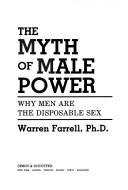
Hidden costs of the male role, the price of “male power,” and male disposability.
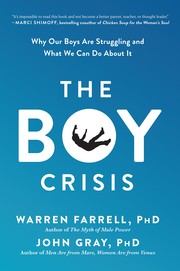
Why boys are struggling and what must be done to reverse the crisis.

Male emotional life, communication, and mutual misunderstanding between the sexes.

A philosophical analysis of discrimination against men and boys.
The psychological price of the traditional male role and the myth of male privilege.
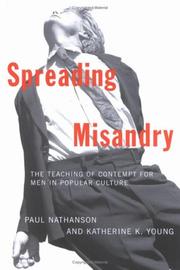
An investigation of the image of men in modern popular culture.
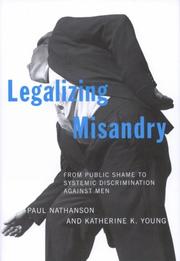
How contempt for men moves from culture into public institutions.

A male account of relations between the sexes through evolutionary psychology, ethology, and reproductive strategy.

Male crisis, suicide, fatherhood, and the Man Box. Barker sees male pain clearly, then too often tells the man to fix himself.
A critique of the confrontational model of relations between men and women.

Male maturity, initiation, and the search for an adult identity.

Raising boys and the consequences of banning male emotional expression.
Covers serve as visual identifiers for editions. Most images are provided by the Open Library catalogue.